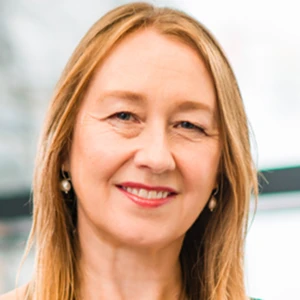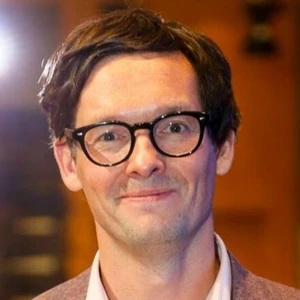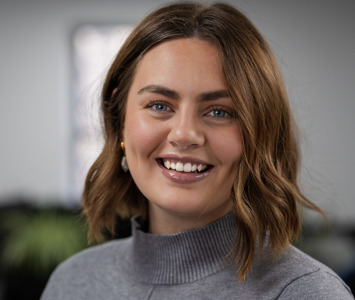


In this episode, host Brandon Ashplant talks to The Fund Foundry team, Rebecca Booth, Justin Sykes and Dirk Bischof. The first programme of its kind in the Crown Dependencies, offering support to first-time and emerging fund managers across every asset class, The Fund Foundry will select five managers each year from a competitive global shortlist and give each a £25,000 service voucher redeemable against legal costs, fund administration and audit in year one. Successful applicants will also have be paired with a mentor from an established fund manager. Dirk, Justin, and Rebecca discuss how the program is helping first-time fund managers turn a strong thesis into a viable launch, and why Guernsey’s reputation, regulatory framework, and investor trust make it a jurisdiction of choice for sustainable finance, impact, and climate-focused first-time funds.
Transcript below:
Brandon (00:00)
Hello and welcome to the Sustainable Finance Guernsey podcast. I'm your host, Brandon Ashplant. In this series, we speak to global leaders shaping the future of green and sustainable finance, drawing on Guernsey's internationally recognised expertise in the sector. Today will be more funds focused. Guernsey oversees more than one trillion pounds in the Island's investment sector and more than 280 billion pounds in regulated AUM.
Today I'm pleased to be joined by the directors of the newly founded Fund Foundry, a new 12 month program structured for emerging managers ready to launch their own fund. Today we are joined by Dirk Bischof, Rebecca Booth and Justin Sykes here to discuss how the program has been created to support first time managers to establish themselves. So without further ado, welcome to the podcast.
Brandon (00:53)
Fantastic. So why don't we start with you know, introducing yourselves and and can you tell us a bit about your respective kind of careers to date?
Dirk (01:02)
Sure. For the last fifteen years I've spent most of my time helping founders grow and scale their businesses through various programs, idea stage startup growth, built a fund around around it, and that's been the last couple of years and now having relocated to Guernsey and supporting emerging managers, I'm super excited to be working with Rebecca and Justin.
Justin Sykes (01:31)
And yes, I spent probably the first ten years of my career working at the intersection between private wealth and economic opportunity. So working with foundations, family offices on deploying capital to achieve defined social impact as well as commercial return on investment. And then subsequently over the last ten years now have taken that into a private business where we're advising both fund managers and LPs on deploying capital to achieve positive impact for planet and people as well as generate commercial returns on investment.
Rebecca Booth (02:14)
And I've been a non-executive director in the investment funds industry with actually 20 years experience in that sector. For the past 15 years, I've been specifically focusing on sustainability and funds that provide capital through to various projects.
For the last eight years, I've been on the Sustainable Finance Council in Guernsey. I've got a qualification actually from Cambridge on Sustainability Business Management and a degree in a master's degree in Corporate Governance. What I'm actively involved in really is promoting good governance and values driven decision making, which really feeds into sustainability.
Brandon (02:55)
Brilliant.
So let's jump straight in into things. Justin. You know, how is the Fund Foundry going to be supporting investment into it into sustain sustainable finance and like sustainable outlets?
Justin Sykes (03:10)
Well, frankly, our applicants are doing all the work for us. I think ninety percent of the the 70 plus applicants so far to the Fund Foundry, bearing in mind we've got a number of weeks left to go before the window closes, have indicated that their funds have an impact thesis. Basically, what that means is as part of their investment strategy, they're seeking to achieve certain social, climate, or broader environmental goals alongside delivering a financial return on investment. So that's brilliant. That's a great start. But I think what we can what also is really exciting for us is this aligns so well with Guernsey as a funds jurisdiction and our reputation and a track record as a sustainable funds hub. And that's driven by our unique regulatory framework for first for green funds and then more recently for natural capital. So I think a lot of these funds that are coming through are hopefully going to go on to then seek you know the the the the funds label on either the green track or the the natural capital track, which is great news. And I think surrounding that is a network of of specialist service providers and and and advisors that understand sustainable finance and can help them on that journey.
Brandon (04:34)
Excellent. So what is it about Guernsey as a jurisdiction that makes the island sort of the perfect home for the Fun Foundry, but also for you know emerging managers as a sort of collective?
Rebecca Booth (04:48)
Well, I think there's sort of four main reasons why Guernsey is such a good jurisdiction. I mean, if you compare it to other jurisdictions, for example, Luxembourg, you've got an actual saving of about three million euros over the life of the fund. Now that's really important when you're a first-time fund manager. It means you're looking after your investors. It means that your costs are lower and it really does show how Guernsey can support that emerging manager side. What's really important also for emerging managers is their access to investors. Guernsey has got a really good reputation for good due diligence, good corporate governance, and investors really recognise Guernsey as a safe jurisdiction. The other reason is its private investment fund. That really enables funds to launch within one business day, so that means that emerging managers have that flexibility of being able to use a regime which suits their needs.
And then lastly, and this is a really important point, Guernsey is internationally recognised as being credible and flexible and suitable for institutional capital and emerging managers. And that's not just for first-time fund managers actually, it's helpful that emerging managers know that they can be on a growth path in Guernsey as well. So we have not just first-time fund managers for 30 million venture capital funds in infrastructure, in private credit, private equity funds, but we've also multi-billion pound fund managers here as well, so we've got that whole range of fund managers that choose Guernsey to domicile their funds.
Brandon (06:26)
Definitely. And you know, as a fund manager going out and spinning off on their own or sort of setting up for the first time, you know, what are the some of the key challenges that they sort of, you know, typically come up against Dirk? You what are the typical sort of barriers to entry for them?
Dirk (06:41)
There's a number of barriers. And often, you know, fund managers look at what they what they might have done in the last couple of years, the last decade. I think one thing is they have to understand like, and often they know setting up their first fund, that's a that's a decade-long activity. If you then think about fund two, fund three, you're talking multiple decades that you're gonna be spending on your own fund with your with your partners, with your investors. So whilst most emerging and first-time fund managers have nailed their thesis, often they might be lacking the support network and the ecosystem around them that will really support them. And I think that's something that we've brought together with the Fund Foundry in Guernsey. It's really an ecosystem of providers and supporters that will rally around an emerging manager. So that's one the lack of an ecosystem. Often you might have emerging managers who are technically very adept; they understand investing. But as a manager, you have to go out there and you have to market your fund. There's a whole new skill set that has to come around these emerging managers as well. We have talked a little bit about the cost, the cost wall that will face you when when starting a fund. Understanding your cost basis from an internal and from an external perspective. That's definitely something and again, being able with the Fund Foundry to especially in that first year offer the support that we now have put together around the services voucher and cost reductions across our service providers, that can really make a material difference to somebody getting their emerging or first fund off the ground. And it's also a credibility gap. And I've seen this in the last 15 years with founders taking part in incubators, accelerators, you all of a sudden get the support that we engineer around somebody that will then be able to go out and say, I have worked with this program, I have worked with these providers. And it's almost like I wouldn't say it's a stamp of a- it's a blank stamp of approval, but having gone through a program like that will definitely add to your credibility and not to speak about, you know, the network and access that you can get.
Brandon (09:06)
Yeah, certainly. So so let's get into the the the the nitty gritty, I suppose, of of what it what it looks like in practice. You know, can you talk us through the how the Fund Foundry will work in terms of I guess obviously it's structured as a non profit initiative, it's a charity structure. but what does the sort of twelve month horizon sort of look like from the sort of perspective of that that manager as well? You know, what's the what's the mechanics look like?
Justin Sykes (09:30)
Great. So we're cantering towards the close of the application window. We're hopeful we'll receive around a hundred applicants. They will be screened down primarily using the Guernsey Financial Services Commission fit and proper criteria to 20 really strong applicants. They'll be invited to Guernsey in September for 48 hours.
Where there will be a process where they will pitch to an established panel of fund managers. And ultimately we will have our first our inaugural Fund Foundry cohort of five managers. Those five managers are then entered into a year-long program of support. And I think the best way of describing the program of support is breaking it down into two components: one financial and the other technical. So on the financial side, and Dirk has hinted that hinted at this already, off the bat, each winning manager will receive a £25,000 voucher, redeemable against professional services fees for the first year of fund launch and operation. And the professional services categories are law firms, fund administrators, and then audit firms.
What's really important to get across is each of those three professional service categories have, especially for the Fund Foundry program, offered to discount their fees against the typical commercial rates. So what you're actually getting is a £25,000 voucher, which is then you're able to then apply that against discounted fees. And then combined with other benefits of the program, such as a bank that we have on board that is providing a free account opening for GPs. We're looking conservatively at about 75,000 pounds of cost savings versus what would be the standard commercial fees if somebody came outside of the Fund Foundry program. And as Dirk mentioned, that's pretty material for a first-time manager. So that's the financial part. And then on the technical side, we've got a number of elements which we think again are
Almost you know just as valuable as the financial components. So one is that we have a GP mentor program where we've got a number of GPs that are established GPs, their structures in Guernsey, but they're all on their fund twos, threes, and fours. And what's really important here is that they were a fund manager, a first-time manager, five years ago, ten years ago, and they have the scars to show for it. They've got
They've got a really good understanding of what worked, what didn't work, and they can provide that really important guidance and mentorship to these new managers on what not to do, what IT system to avoid like the plague, what decisions to make and not make. And we think, as I say, that's that is huge intangible value. and then we are I'm we're really I'm I'm personally really excited about work we're doing building an LP track to our programme.
So we have a number of relationships with family offices, including some on Island and and other LPs, such as a private bank we've been talking to, where it's interesting that you know they don't see this as an incubator, they see as a fund incubator, they see this as a curated GP platform. So they're saying, well, look, you might get a hundred first-time managers coming through this program and a large number of those with sustainability credentials.
These are precisely the type of managers that we are looking for or our clients are looking for as prospect investments. So they've come and said, well, you know, could we not just look at the five but actually maybe the the 20 finalists and can we consider these on a on a first right of refusal basis for consideration as a potential investment prospect? And I think what's also really exciting is that you know, a number of conversations we've had with family offices, they've said, well, yeah, we could do the standard LP ticket, but actually it would be really interesting if these managers could consider an investment position in the management company. So in effect GP staking, or could these managers consider co-invest opportunities? So on our application form, we've actually asked the managers, is it just an LP ticket you're interested in, or are you open to other investment opportunities? And we can, I think through this, we can really start to get a flywheel going between LPs and GPs that make this program a really sort of sticky, exciting program.
Brandon (14:22)
So that's yeah, very interesting. So what's the, you know, if you're a manager looking at this opportunity and and keen to kind of I guess position yourselves in line for that that funding, but also the the ancillary sort of mentorship benefits that kind of come along with with being involved involved in the scheme, you know, what what could a usual manager coming to Guernsey look for in terms of the structuring opportunities, Rebecca? You know, what are the sort of wraparound products that Guernsey offers by way of sort of yeah, sort of structuring per say?
Rebecca Booth (14:53)
Yeah, so Guernsey's got a well-tested amount of structuring available for funds and I think that's a really important point to make. There's protected cell companies, there's companies and there's GPLPs that can be all private investment funds and that private investment fund is a unique opportunity to be able to have a regulated fund which is perfectly aligned with what's required as an emerging fund manager. There's the opportunity to actually be able to launch your fund really quickly over there under the Private Investment Fund and it's really straightforward application as well with flexibility. One of the main things for it is really that there's no prescribed minimum size of the fund and also there's not a limited number of investors so you can have small ticket investors coming into the fund which is crucial really when you're a first-time fund manager.
Brandon (15:49)
Mm. So that's almost a brilliant route to market for this kind of scheme. Yeah. Excellent. So sort of shifting gears slightly, you know, what are the sort of I guess the key areas of support that participants can receive? I I I mean, I guess Justin touched on this in terms of the mentorship, but is there anything sort of beyond that, Dirk, that sort of you know, those prospective candidates can sort of look forward to?
Dirk (16:12)
Yeah, absolutely. Yeah. I think one of the most undervalued but really high value things is the cohort itself. I've seen this over a decade or more that founders and emerging managers who are going through a program at the same time, they will often become each other's support network. In the good times and bad times, they'll be able to share tips and tricks of what they see as working, share approaches, share contacts.
And that's really something the cohort itself, together with the mentors and the providers we're bringing together, that will be its strongest support network for questions, comments, thoughts, challenges. So that's something that we really hope for. And then of course, as the program gets going year in year, as the month in, month out, we will then add to any banks of questions that emerging managers have.
Share answers with everybody that is in the program and it really becomes a collaborative effort to get somebody from I have an idea, I might have a couple of initial LPs, somebody that might be interested, to getting emerging managers to first close more quickly, having fielded all the questions that emerging managers will have. So yeah, the beyond the voucher, the mentoring, support with service providers, it's the cohort themselves.
That really we think will do a lot of the heavy lifting.
Brandon (17:44)
Yeah, sure. and then I mean, Justin, you touched on earlier this idea that sort of Guernsey has, you know, in effect over the last decade, sort of carved out a leadership position globally as a sort of yeah, a leader in sort of sustainable finance, you know, developing the pioneering frameworks we saw and you touched on in particular. So the, you the Guernsey Green Fund, the natural capital fund, kite marks, and sort of helping to channel sort of capital towards real world sustainable outcomes that align with you know the UN SDGs and so forth. ~ You know, do you expect this sort of the support of the managers pursuing these sort of sustainable-minded strategies? You know, do they did do will they be sort of looking to these kite marks as clear markers to sort of align with and therefore value themselves against. You know, what role do these sort of kite marks I suppose play in sort of the the the wider growth and development of this sort of emerging manager piece?
Justin Sykes (18:44)
I think particularly for first time and emerging managers, these types of standards and certifications are extremely power in terms of validating their commitment and integrity around their investment strategy. I think the world is moving from a tell me model to a show me model, and that there is increasing requirement from sustainability focused investors that a a fund manager is able to actually sign up to you know international standards and frameworks and that those standards and frameworks require evidence of the execution of investment intent.
And it's not just, you know, we've taken your money and we have, you know, this is our broad generic investment thesis. It's you know, we have a sustainable investment strategy, capital has been deployed, and we're able to evidence the outcomes of that investment through real data, and that data can be communicated back to managers and frameworks that require managers to align with investment sustainable investment taxonomies and require those managers to report back to investors on a periodic basis on the actual use of proceeds or the actual impact of those sustainable investments are critical. So I think absolutely the regulatory regimes that we have in place in Guernsey for sustainable investment, particularly for managers that are building their LP base and building their position in a competitive environment are absolutely critical.
Rebecca Booth (20:37)
If I could just add as well, the fact that the Guernsey Green Fund has been in place for so long and the service providers have been working with sustainability funds for so long demonstrates that Guernsey is an excellent jurisdiction for building emerging manager funds in that area.
Brandon (20:59)
Yeah, definitely, definitely.
What are some of the maybe un other sort of ancillary services that Guernsey can provide? You know, regular listeners might be quite familiar with this, but you know, what are the sort of offers in terms of sort of admin, audit, you know, what do those sort of other sort of services look like that can support that, you know, those are managers that come onto that s this scheme. yeah.
Rebecca Booth (21:19)
Yeah, sure. So, Guernsey prides itself on its relationships and that's what's really important actually about the service providers here. So you're not just a number on a list when you become a fund manager in Guernsey, you're a valued customer and I think that's a really important way of recognising how Guernsey stands out. Guernsey also stands out because we have a huge amount of experts who are living on Guernsey who are absolutely passionate about what they do and you'll absolutely see that as a a fund manager coming to Guernsey that that is the case and that's different from as I hear in other jurisdictions.
Brandon (22:05)
Yeah, absolutely.
Justin Sykes (22:07)
And if I may add as well, this I think is all about piecing together a really comprehensive network of support. And included in that, I think, are some really interesting elements. And one is is we have a partner on the program that provides GP bridge financing. and I think particularly for early stage managers, that you know, that that the time that it takes typically to get to first close over the last few years has taken longer and longer.
And therefore these specialist instruments that could be used to kind of bridge managers to get to first close all form part of the enabling ecosystem that help managers sort of overcome these sort of chicken and egg challenges that that they often face.
Brandon (22:52)
Mm. Yeah, definitely. so just taking maybe a step back then, Dirk, you know, what's the sort of I well, I guess when launching a new fund like this, you know, what are the sort of factors that are critical, and I guess the benchmarks that you consider to be sort of long term success. You know, I think there's the obvious ones, but you know, what's the you know, in terms of sort of fitting within this kind of a mold or this sort of of the Fund Foundry, you know, what does that look like, yeah, sort of long term?
Dirk (23:24)
I guess you really want to have a right-sized foundation as you get your your fund off the ground from a a structural perspective. You want to have a size of fund that is gonna clear the hurdles in terms of costs that where the where the GP or the manager gets rewarded appropriately. You want to really make sure you get it right in terms of your access to LPs right now as you get it off the ground versus what you still have to bring into the fund as you walk towards first close. So this right-sized foundation, with the right legal partners, with the right fund administration partners, the right banking partners, the right audit partners, like these found like getting the foundation right is really critical. And whilst we've seen a lot of I would call them maybe neo fund admins that might be you know in the US or in the UK that are that are able to offer an anonymized you know tech platform where you can do a lot of these things. We think that and as Rebecca already rightly said, the relationships are really critical as you get your first fund off the ground. Who are the people that you're gonna be working with as you get the fund off the ground? That's something really, really critical.
And also having credible partners from day one across fund admin, legal auditing, that give the confidence to the investors that you know what you're doing, the people and partners around you know exactly what you're doing, and you're really getting to that first close in a very sensible manner.
We're thinking, and Justin alluded to that, that getting to first close has been more challenging. We still think that with a a credible, experienced manager, whether they're spinning out or setting up a twelve to eighteen month timeline is still something that is pretty realistic. we think you can somewhat shortcut this, working with the right people at the right time on your foundational work. And then really for emerging managers, you have to really look at the time horizon of fund one, raising the money, deploying it, managing it. And then you have to be thinking about like what will fund two look like. So, and again, structuring everything across this time horizon with the right people and the right partners around you from the very beginning is very, very different to signing up to an online program or signing up to an online platform that can do all those things for you to some degree.
But it's just it's it's like day and night, and you want to get those foundations right.
Brandon (26:09)
Yeah, definitely. Yeah. Okay. And and so looking ahead then, Justin, you know, what impact do you hope the the Fund Foundry will have on the next generation of of fund managers?
Justin Sykes (26:22)
Yeah, it's a great question. I think I'm really excited to see some of the the the prospect managers come through. and I think you know you alluded to it earlier. There's a couple of sort of typologies. you've got you've got professionals working for asset managers and existing firms who are now sort of spinning off spinning off and creating their own shops. But we see another typology, which is the entrepreneur typology.
Where somebody has created a successful business, and that business requires financing of underlying entities. And their success has got them to a point that actually to grow and achieve their objectives, they need a permanent capital vehicle to do that. So they that they're growing, their success is growing them into a fund. And we've got some really exciting prospects coming through around carbon removing removal technologies.
around financial inclusion in in sub-Saharan Africa, around space technologies, using remote sensing and GIS to to monitor climate change, deforestation. And what gets me sort of out of bed every morning is is is to say, look, if these vehic if these entrepreneurs were able to to mobilize hundreds of millions into their vehicles eventually, what's the impact of that in terms of the underlying environmental, social and climate issues that they're they're seeking to address through their investment theses.
Brandon (27:57)
Yeah, definitely. Okay, brilliant. Well, it's a fantastic initiative and and well done to you all for sort of bringing it all to the fore. And I think it's a fantastic example of Guernsey industry really innovating and taking the ball by the horns. So congratulations to you all and well done. just to end before I let you all go, if there's one message you'd like sort of aspiring fun founders and managers listening today to sort of take away from this conversation, other than obviously get involved, you know, what would it
be fr from each of you. If g if I could just start with you, Rebecca.
Rebecca Booth (28:31)
Okay well obviously apply, the window is open until the 1st of September and the application form really makes you think about all the questions that you need when you're an emerging manager because they're aligned with the regulation, they're aligned with what investors will be looking for so it's a really good opportunity to make sure that your thesis and your whole idea is actually in place so open that application for me and get filling out the form.
Brandon (29:02)
And yourself, Justin?
Justin Sykes (29:05)
I think the key message to say is that Guernsey is a is a fantastic destination for first time managers. Guernsey is very well known for very large funds, you know, billions of dollars of funds. But I think the message is, you know, there's no size that's too small. And I think we're really open for those first time managers with great investment theses, and we'd love to to make Guernsey your home and grow with you. So, you know, you become that next billion dollar fund in five, ten years' time.
Brandon (29:34)
Excellent. And just to finish, Dirk.
Dirk (29:37)
Yeah, like we are really excited to see first-time fund managers and emerging managers to apply to the program. It is a a collective effort. You don't have to work it out all alone. even for the application process, we provide some hand holding if people have questions on that. And we are we exist to lower the barriers to get from idea to first fund and to first close through our
collaborative effort across the whole partnership.
Brandon (30:07)
Excellent. Well thank you all for joining us on the podcast today. Thank you.
Rebecca Booth (30:11)
Thank you.
Dirk (30:11)
Thank you.
Justin Sykes (30:12)
Thank you. Thanks, Brandon.
Brandon (30:14)
Well, thank you to the three of you for joining us and for helping to advance the conversation around sustainable finance as a core pillar of global finance and of course, Guernsey as a leading global funds domicile.
The Fund Foundry window for applications is open. If you miss this cohort, there will be more to come from the Fund Foundry for prospective managers. will only take 30 seconds to apply. And this gives you access to the FAQs and the ability to sign up to the webinars and drop in office hours. Links to the Fund Foundry are available in the description. And thank you to you for listening. If you enjoyed today's discussion, we have plenty more interviews for you to explore on our channel.
We look forward to welcoming you back to the next episode.