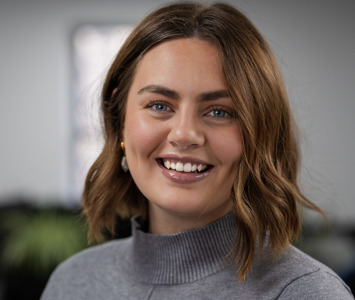


In this episode, host Ben Perfitt speaks with Gus Majed, Founder and CEO of Paratus, and Adèle Gale, Managing Director of Paratus Services Guernsey. The discussion explores the role of insurance in managing energy price volatility and supporting investment in renewable energy. Together, they examine how risk management solutions can help stabilise revenues, improve financing conditions and support the transition to a lower-carbon energy system.
Transcript below:
Ben Perfitt
Hello and welcome to the latest episode of the Sustainable Finance Guernsey podcast, rated one of the top 10 most useful sustainable finance podcasts by the Green Finance Guide. Guernsey is one of the jurisdictions leading the way in green and sustainable finance, and in this series, we speak to some of the leading global figures shaping the future of the sector. My name is Ben Perfitt, and I'll be hosting today's episode. I am a Senior Technical Associate at Guernsey Finance, the island's promotional agency for the financial services sector, and I lead our work in insurance and sustainable finance. Today, I'm delighted to be joined by Gus Majed and Adèle Gale of Paratus Group.
Paratus is the world's first insurer and reinsurer underwriting energy price risk, providing innovative, commercially viable solutions that help accelerate the transition to net zero.
Gus Majed is the group CEO and founder of Paratus, which he established in 2020 and brought into full commercial operation in 2024 following investment from Ara Partners, a firm focused on industrial decarbonisation.
Adèle Gale is Managing Director of Paratus Services Guernsey and Head of Operations for the Paratus Insurers. A chartered accountant with deep experience across Guernsey's insurance sector, she has held senior roles at Aon, Artex and Robus, now SRS, and served as Chief Risk Officer and Director for multiple firms. She also co-authored Guernsey's ESG framework for insurers and has led several industry firsts, including the island's first catastrophe bond and pension de-risk in captive.
Gus and Adèle, welcome to the podcast. It's great to have you both here today. In today's episode, we'll be diving into the intersection of insurance innovation and the renewable energy transition. We'll explore the vision behind Paratus, why Guernsey was chosen as the home for their insurers and why now is a critical moment for innovation in this space. So firstly, over to you, Gus. Can you please explain to our audience why price volatility is so damaging for renewable investment?
Gus Majed
Yes, I think fundamentally what we have seen with the expanse of renewable power and renewable assets is a requirement for stability. Long-term stability was first and foremost in the design of long-term PPAs, ROC and FIT, essentially government-backed subsidies. These did their job.
Fundamentally, the assets were viewed somewhat akin to property. They were backed by these structures. What that did was bring external capital against a fixed annuity. You saw in ultra-low-interest rate environments after the financial crisis, 50 bps to 100 bps, where a lot of these assets were generating returns of 10 to 15%. For a very long period, over a decade, you had stability that allowed incredible investment into the space. Part of it was also that there was long-term indexation to LNG, because the price of gas and power were highly linked at the time.
What’s happened is that these subsidies started to wear off. The ROC and FIT subsidies wore off, and a lot of these assets became more and more merchant. One of the fundamental principles of financing assets is the stability of revenue and the recurring nature of revenue. It becomes more complex when revenue is volatile and assets become more merchant. At the same time, the market itself started to decouple away from long-term gas contracts, LNG contracts. For example, some of the Qatari contracts in the beginning were 15-year index contracts. They moved to spot. Suddenly you have a confluence of increased volatility in the power market, more merchant assets, and huge volatility. The question is how do you contain it, how do you harness it, and still enable the energy transition. That’s where Paratus steps in.
Ben Perfitt
Thank you, Gus. Thank you for the background. That nicely follows on to our next question. How does price risk insurance address this volatility and accelerate renewable deployment? What role can financial innovation, not just technology, play in climate progress?
Gus Majed
I think a major part of that is enabling a pragmatic energy transition. What we do at Paratus is give both consumers and generators the ability to protect their revenues, their budgeted revenues on the downside, somewhat akin to an enhanced PPA, but importantly retain the upside.
The issue with long-term PPAs is you lock in for up to 10 years but give away every cold winter and every political exogenous shock. We saw last summer the Israeli-Iranian conflict when power prices and gas prices spiked. This current winter we have seen very strong power and gas prices. What we do is enable generators to benefit from higher prices but in a more orderly, lower-volatility manner using the insurance policy.
At the same time, for consumers, they can cap their cost base for the annual budget. If there is a retracement in the power or gas price, they can physically buy lower-priced energy. It’s about retaining optionality and making it financeable and monetisable.
Ben Perfitt
Thank you, Gus. Adèle, do you have any further thoughts?
Adèle Gale
We need a huge amount of investment each year. I saw an EY report suggesting that only 64% of companies globally have a plan to transition to net zero, and only 12% have taken steps towards that. In recent years, £83 billion has contributed to Britain’s GDP from this sector.
There is huge volatility and uncertainty in the economy within Britain and globally. Finding companies that can advance technologies like battery storage and carbon capture is fundamental. Building the financial services infrastructure around that is also critical to support companies taking risks and developing infrastructure in an environment where fiscal policy, government policy around sustainability, and infrastructure remain uncertain.
It is crucial that insurance, the funds industry and the wider financial services ecosystem come together to support the global transition to net zero and de-risk it as much as possible for entrepreneurial businesses.
Ben Perfitt
Thank you, Adèle. The question is: if price volatility is damaging for renewable investment, why hasn’t this cover existed before Paratus?
Gus Majed
I wouldn’t say price volatility itself is damaging. The key is having the ability to harness it, understand it and mitigate it in an orderly way. If you can do that, it becomes incredibly powerful.
Many assets are moving into merchant risk. When it comes to financing, the LTVs and the debt service coverage ratios that banks require are affected. What Paratus does is step in and protect that merchant element, creating more stable revenues going forward, which makes projects more bankable and financeable.
It’s about innovation and using insurance capital to provide a more balanced transition.
Ben Perfitt
In the early stages of Paratus’ development, why was Guernsey chosen as a domicile?
Adèle Gale
The first time I met Gus five years ago I was working for an insurance manager in Guernsey and joined the company last year.
One of the things that made Guernsey appealing for Paratus was the expertise within the insurance management industry. Unlike other domiciles, Guernsey has a predictable regulator using a principles-based approach. The insurance management sector understands what companies are trying to achieve and works with them to build solutions.
There is also a wide infrastructure of professionals available on the island to support businesses: legal firms like Appleby, actuarial firms that support IFRS 17 analysis, and both internal and external auditors. We have all of the big four audit firms alongside smaller specialist firms that provide bespoke services suited to entrepreneurial startups.
Guernsey’s close-knit ecosystem allows businesses to collaborate while protecting intellectual property and thought leadership. That enabled Paratus to buy into Guernsey and ultimately license its insurer here.
Ben Perfitt
From your perspective, Gus, what were the core reasons Guernsey was chosen?
Gus Majed
We had several options but Guernsey consistently came top. As Adèle said, the service sector and professional expertise are first class.
We met the regulator and had excellent discussions. They understood what we were trying to do. The product had never been deployed globally, so there was significant innovation involved.
Guernsey is very forward-thinking in renewables and technology, and we trusted the solvency-like capital regime.
From a practical standpoint, geography also matters. Energy markets operate 24-7. Being near London is ideal: mornings connect with Asia, midday covers Europe and the UK, and afternoons connect with the US. In every way we looked at it, Guernsey ticked every box and it has absolutely not disappointed.
Ben Perfitt
To give listeners context about how your policies operate in practice, how do they support renewable generators and energy consumers?
Gus Majed
Unlike derivatives or parametric solutions, which enter the world of contingency insurance, we provide genuine indemnity insurance contracts. We took extensive legal advice from Appleby and barristers to structure that.
The benefit is simplicity. Everyone understands what insurance does — it protects against exogenous risks.
For a generator, the risk is a collapse in power or gas prices. We protect against that. At the same time, generators retain upside when prices rise.
For consumers, the opposite applies. Airlines, shipping companies and industrial consumers worry about events that drive prices higher. We cap the price of power or gas for them. If prices fall, they can still buy lower-priced energy in the market.
It is an understandable product deployed in a regulated way. We always emphasise alignment. We work for the insured. We do not trade against our clients. Many of us have traded energy markets for decades, so we understand the markets deeply and build trust with our clients.
Ben Perfitt
How is Paratus reshaping risk and competitiveness in clean energy markets?
Gus Majed
Through direct relationships with clients. It is an end-to-end offering.
Our team consists of former energy traders with 25–30 years of experience. Understanding risk means understanding exposure — how much energy an industrial consumes, whether there is seasonality in consumption, or where a generator produces power.
We analyse those dynamics and share them transparently with clients. Because we don’t trade against them, they see us as partners.
Ultimately, this improves procurement, generation optimisation and financial outcomes. If we do our job properly, IRRs improve, NAVs improve, dividend cover improves and consumers procure energy more efficiently.
The result is greater efficiency and competitiveness.
Ben Perfitt
Transition finance often involves convincing policymakers and businesses that decarbonisation is commercially viable. Can you talk about the Low Carbon transaction and why it matters as a proof point?
Gus Majed
For us it was instrumental. Innovation requires a degree of bravery after thorough due diligence.
We worked closely with the client over six months, analysing assets, generation capacity and profiles. We compared alternatives and priced them in terms of returns and IRRs.
The asset management team wanted base returns, while the optimisation team wanted the ability to capture volatility and generate alpha.
When the policy was deployed it worked extremely well. At the end of the year the market had retraced, a claim was triggered and paid within three to five days. All the metrics the client was tracking outperformed alternatives.
It proved both the capability of the product and the strength of the partnership.
Ben Perfitt
Adèle, Guernsey has pioneered developments such as the world’s first regulated sustainable fund regimes. Do you see Guernsey emerging as a specialist centre for renewable energy solutions?
Adèle Gale
Yes. Guernsey has a long history of innovation, particularly in international insurance.
Our close ecosystem facilitates collaboration between businesses, regulators and professional advisers. The regulator’s digital finance initiative and innovation sandbox demonstrate a commitment to supporting entrepreneurial solutions.
Entrepreneurs can sit down with the GFSC and have practical discussions about how regulation will apply to their business. The regulator is responsive and provides clarity quickly.
Because of that collaborative environment, Guernsey continues to attract sustainable finance initiatives and entrepreneurial businesses developing innovative solutions.
Ben Perfitt
Paratus has invested in the island and launched a graduate programme. What does building a base in Guernsey mean for your long-term strategy?
Gus Majed
It’s fundamental. We are Guernsey-regulated, so having a strong presence there is important.
At senior level we have experienced energy professionals, but building talent from the ground up is equally important. We recruit bright graduates and train them in the energy markets — renewables, aviation fuels, maritime fuels and carbon markets.
As the business grows we need increasing expertise in Guernsey. Adèle leads the Guernsey operations alongside our chief underwriting officer Stuart Tyler. Expanding that presence is central to our strategy.
Ben Perfitt
Adèle, anything to add?
Adèle Gale
I feel very fortunate to work for a company that actively supports the local community and industry. Hiring a graduate this year is an exciting step forward. We are also investing locally and supporting charities. It creates a strong sense of pride in the organisation.
Ben Perfitt
Looking ahead, where does Paratus go from here? What innovations do you expect in renewable energy insurance?
Gus Majed
Innovation is driven by both supply and demand. We can develop new products, but increasingly innovation is driven by client demand.
Clients come to us with specific problems and ask whether we can solve them. We work with them to design solutions based on our deep understanding of energy markets.
Examples include incorporating regulatory changes such as CORSIA or the EU ETS into insurance structures, or supporting the financing of new wind and solar assets.
Innovation is increasingly client-driven.
Ben Perfitt
One final question — where did the name Paratus come from?
Gus Majed
Some of our colleagues come from military backgrounds. Our chief operating officer, Nick Mys, served in the Parachute Regiment. Their motto is Utrinque Paratus, meaning “ready for anything.”
That philosophy reflects insurance: being prepared for risks, volatility and exogenous shocks. Paratus embodies that spirit.
Ben Perfitt
Fantastic. Thank you very much. Well, thank you for joining us today, Gus and Adèle. I really appreciate your time on our podcast. Thank you to everyone for listening. If you enjoyed this discussion, we have an extensive back catalogue of interviews on the Guernsey Finance podcast channel. You can check them out by searching Guernsey Finance on your preferred podcast platform.
We also have links to Paratus in our show notes. To find out more about Guernsey and its specialist financial services sector, head over to our website, guernseyfinance.com. We look forward to welcoming you back to the podcast. Until then, it is goodbye from Guernsey.