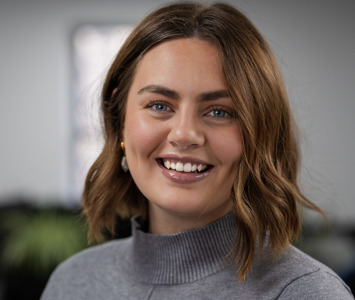


In this episode, host Ben Perfitt speaks with Tom Hoad, Head of Howden Ventures, about how insurance is evolving through startups, data, and collaboration. They explore how new technologies are changing risk management, alongside the growing role of captives as platforms for incubating solutions to complex risks, and the power of client-sourced data in driving innovation.
Tom Hoad references the charity Humanity Insured, led by CEO Charlie Langdale. Humanity Insured funds a portion of insurance premiums to help the most vulnerable access world-class insurance, enabling them to recover quickly and build resilience. Find out more here.
Read the full transcript:
Ben (00:00)
Hello and welcome to the Guernsey Finance podcast, bringing you conversations with leaders from across global finance along the latest news and developments from Guernsey's financial services sector. I am Ben Perfitt, Senior Technical Associate at Guernsey Finance, and I'm really pleased today to be joined by Tom Hoad Tom leads Howden Ventures, the corporate venture capital and insurance incubator arm of the Howden Group, a leading global broker.
Tom has more than 20 years experience in insurance and risk, including 12 years at Tokio Marine Kiln, where he was Head of Innovation and helped develop pioneering products in cyber, supply chain and intellectual property. In 2019, he also founded and chaired the Lloyds product innovation facility, now the Lloyds Launchpad.
Ben (00:43)
So Tom welcome to the podcast.
Tom Hoad (00:46)
Thanks, Ben. Nice to be here. Nice to see you again.
Ben (00:49)
Yeah, great to you too. Let's start with your story, if that's okay. How did you get into insurance, going right back to the beginning, and what's led you to where you are today, working innovation and leading up to Howden Ventures?
Tom Hoad (01:03)
Well, I got into insurance through godfather But I found myself, fair enough, in the beginning of my insurance career, working as an advisor on project finance transactions. So I actually advised banks on multi-billion dollar project financings. so I learned insurance backwards. I learned insurance. What does it do?
How does it protect banks? How does it protect assets? And how do I look at some of the world's largest insurance placements in the world? So it was a really interesting start, to be honest. And my godfather helped me in that role, but I soon sort of started trying to expand what I knew. And so I did all sorts of things from that point.
Ben (01:43)
So that was how you got into the industry. So can you give us a bit of a flavor of your journey from that point essentially, having gotten through your godfather?
Tom Hoad (01:52)
So for me, my journey was really, you know, begin by understanding project finance, understand the legal contractual provisions around it, understand the insurances that go with it. And they're far ranging there from things like construction insurance all the way through to whether the projects got cyber coverage and everything else on them as well. So learning that was really interesting.
I did a master's in insurance risk management because I had to of solve my academic record in the right way. So I did that. And by the time of five years at Millard doing that and trying to branch out into private equity, Broking...
I ended up at Tokio Marine Kiln where I became an underwriter in the enterprise risk division. you know, frankly, I ended up creating a lot of products at Kiln, which I subsequently went on to become the Global Head of Innovation at Tokio Marine Kiln. And that meant that I had a balance sheet to play with as an underwriter. And it meant that's how you and I actually met Ben when we were trying to work on all risks parametric non-damaged business interruption insurance for hotels, which quality name, we called that product. But yeah, so that's how we met. And then I subsequently ended up, you know, loving my time at Tokio Marine, but ended up leaving and going to Howden. And I still work with Tokio Marine now in what I do.
Ben (03:09)
Thanks, Tom. so in terms of your current role at Howden Ventures, from my understanding, and please correct me if I'm wrong, but do you essentially go and identify businesses from all sectors ⁓ of life, essentially, and look at businesses that are using technology in a way that helps clients or can help clients understand their businesses better?
Tom Hoad (03:38)
Yeah, I mean, I think that's a medium elevator pitch, I give you five out of 10. I run Howden Ventures. And really, it's about how do you understand and think about client problems in a novel way. And an amazing community is the sort startup community where really bright, very capable people leave often very well paid jobs to run a startup because they've got a passion.
Ben (03:43)
Okay.
Tom Hoad (04:06)
and they know that they can solve a client problem. And a lot of that is around new technology, to be fair. And it's typically going to be about how does technology unlock client problems in a novel way. But the remit is really very broad. It's around how does Howden think about the client landscape? What are the things that affect our clients? And how do we use both the startup community but our own internal resources to create solutions for them that are material and actually help them with what they're doing?
So on the startup side, that does mean that we make occasional investments. So as a startup, you might come to us because we've got money to invest in you. But the big part of that is the strategic relationship we then form with that startup, which then drives client solutions or novel services in hopefully quite clever ways. So that's broadly what we're doing.
Ben (04:56)
So on that basis, can you give an example of a venture or a startup that you've worked with? Perhaps given the kind of the focus on maritime insurance at the moment, given the global context. Ceto AI, is that something you can talk to our listeners about?
Tom Hoad (05:10)
Yeah, I think if you go back to the beginning of Ceto AI Tony Hildrew, phenomenal founder, I've backed him for a long time now. He's a marine engineer. And what I think he understood was that, you know, as a marine engineer, he could see the symptoms of problems with risk associated with vessels. He also knew that the vessels themselves had an amazingly abundant and rich source of data that actually flows through the alarm monitoring system but that isn't used for the purposes of identifying with risks that you can predictably decide on where to maintain assets or to intermediate things that might be problems. So Ceto is really born out of really technical foundations in marine engineering, driven by a human who has a sort of an entrepreneurial mindset and is prepared to spend, you know, sometimes I think over 24 hours a day working hard on delivering what now is Ceto AI, which is I think the first ever dynamic ⁓ marine insurance MGA actually. So, the Ceto journey was really about saying, you know, what technology is out there that can help the marine sector? And what would it materially mean in terms of risk? And therefore, how can we help and what Ceto surfaces is data around ships, but particularly the engines, the boiler rooms, the propellers, moving assets on board vessels that often show signs of wear and tear way before a loss happens.
So that our Ceto clients can actually intermediate and remediate issues before they become losses in insurance. And that as a concept resonates incredibly well with the insurance partners and our broking teams at Howden that we've worked with on that project. So Howden now uses Ceto as a placement partner. We're actively showing them risks as a Howden insurer.
And as a result, that helps us navigate client needs by understanding client data from the ground up, which is what Ceto does. So it's very clever technology package, but they're also able then to take risk as an MGA. So the whole thing kind of comes together quite nicely.
Ben (07:20)
And given your position at Howdens now, do you have access to essentially a full ecosystem of the insurance market? Whereas before at Tokio Marine Kiln, you were an underwriter essentially. I imagine sitting where you do at Howdens now kind of gives you access to teams across the marketplace.
Tom Hoad (07:39)
Well, we all need to be good at this. We work in an ecosystem and it's not normally, you know, one person or one company that does stuff. It's normally a collaboration of some kind and indeed internally at Howden. There's a lot of collaboration going on over here. But yes, I would say at Tokio Marine, the amazing benefit of having effectively a scratch or the pen to underwrite deals was transformative, but I would say the downside to that is that you are constrained by appetite for new things, which in any company necessarily, especially when you're doing really cutting edge things, you want to go through an incubation phase. So you want to steward your capital effectively against the new thing so that you can learn from it and then scale up when you know a little bit more about it. So what I think Tokio Marine do very well and still do it very well ith Rob Jarvis, who's at the helm of this, and there's other entities within the Tokio Marine group who are beginning to do this very well as well. They are very good, I think, at accepting that risk is changing and accepting that you have to actually look at things from an incubation standpoint, first of all, in order to know a bit more about the way that the risk behaves so that then you can decide to put more capacity behind it. So, yes, the main reason for one of the main reasons for leaving Tokio Marine was to try and scale up with other insurers. And I think Howden's done a great job there. We've had a number of insurers working with us very, very well around this sort of subject, especially through Howden Ventures, but more broadly as well in the group. And we're looking to do more of that as we go forward. So a big part of that was to have more access to insurers, but it's also importantly to be much closer to the client. So as much as Tokio Marine and other insurers have great relationships with their end clients, a broker is a much better place to be in my opinion to have access to the real symptoms of risk a client has. A client won't always turn up and say, I need business interruption insurance. They'll tell you that it's a bit of an issue for me when the logistics centre goes down, we can't get our goods from A to B. Can you help me with that? And actually those symptoms of risk are what you want when you do new product design, because they don't tell you the answer, they tell you the symptoms. A bit like going to see a doctor and saying, I've got these issues. And the doctor might tell you, you've got hemochromatosis or something like
And that's the answer. But clients don't do that. They tell you about their symptoms and their problems. And that's where you've got to work.
Ben (10:11)
Great, so now you've got access to the clients essentially, whereas before you were having to go through the likes of myself or a broker to get to the client and then you get mixed messages.
Tom Hoad (10:18)
Yeah.
Well, you did did a very good job for what's worth and lots of lots of good brokers out there. But when you're doing new product design, like any design thinking, you really want real like feedback from a client and what a broker does do is often, especially with insurers, they will try and get insurer excited about things which might not necessarily be a true reflection of what's going on. And they have to do that to some extent. But but but but I think for me going to, especially a broker like Howden, which now my goodness, what a journey it's been on. it's, Howden is everywhere now, especially in the US. So very exciting for me and very exciting for me and the team to be part of Howden's new journey with a global footprint like we have, which is really good.
Ben (11:08)
Great, and just going back to these startups quickly, is the aim to form an MGA then in terms of the clients you see? It can be, but it's not.
Tom Hoad (11:15)
It can be. And MGA, as you know, have been a sort of a hub of innovation or hubs of innovation for some time in the insurance community. mean, Jewel, which is Howden's MGA, is a great example of that. And for me, you know, when you think about Ceto's journey, it's very natural that an entity that understands the really granular data around risk then can sort of utilize that to pick and choose the risks it wants to underwrite. So that's a very natural journey. But I think nowadays with my role, it's not necessarily that investments we would make would make independent MGA's. I think some of the investments we might make might be cells of jewel or work in different ways in the group to try and solve client needs. And they may not need to be MGA's, they may just be part of a service offering or something else that we do.
Ben (12:11)
Yeah, thanks. That makes sense. Zooming out a bit then, given your kind of experience in the market, kind of where you sit, what do you see the biggest shifts within insurance at the moment? I appreciate it's a big question, but yeah.
Tom Hoad (12:26)
Well, I mean, for me, I think the purview of the market, the insurance market, at least, has always been that they've aggregated lots of data about risk for, you know, hundreds of years. And I think they do. We do it as a market incredibly well. I mean, where else can you go to understand, you know, what the cost of flood insurance would be, for example, in the UK, other than the insurance industry or flood real or wherever it is. I mean, I think we've got a community there that really does understand and aggregate the statistical basis for pricing risk and understanding that and I think that's really important. But I do think that with the advent of all the technological change that we've seen over the past Especially 10 years. You've also got a client base. It's becoming increasingly more sophisticated Around understanding their own risk. So not to harp on about the Cito example, but ship owners who truly understand some of the performance metrics by which their engines may fail, really do have a grip on risk that isn't necessarily reflected in the insurance policy they buy. They may understand things about predictive maintenance that never get to a deductible or never get to a terminal condition in insurance. They may understand that there's remediation they do that is worth something, but it doesn't reflect well in insurance or they know more about it. So I think my point here is that I think there is a shift in that the client sector generally, any sector, through data, especially enabled by new technology, is beginning to learn a lot more about the things that they need to do to win as a business. And a byproduct of that is to understand operational risk in a far more granular way. And that's both a very exciting proposition and it's also an interesting challenge for the insurance industry because the insurance industry needs to step up and recognise that data now exists. And it needs to do a brilliant job at stewarding risk in aggregate, so it understands what flood risk might be worth or what cyber risk might be worth. But it also needs to understand the nuances of any one client far better than before around how they are dealing with that risk. And there's data now that surfaces that in a very granular format, which is really, really interesting and exciting.
Ben (14:48)
So are you saying that the kind of the force for innovation is coming from clients understanding essentially their businesses more and becoming more sophisticated essentially and then pushing the insurance market from that basis?
Tom Hoad (14:59)
I would love to say everyone is becoming more sophisticated. Of course, are examples where that isn't the case. But broadly speaking, the skill sets that I think now are in the insurance ecosystem are a type of talent that is much more cognisant of data, much more cognisant of how to manipulate it, and much more cognisant of what that might mean in terms of partnership, negotiation of terms.
You know, broader ecosystem issues and everyone's doing it to compete. You know, I don't think there's an insurer out there that's not talking about data and therefore, know, if that's the basis on which we're competing, perhaps the new paradigm of data is that actually there's a lot more data that now exists in a format we could ingest in our ecosystem that might come from the client side. And to your point around clients, I think that sometimes
Ben (15:36)
Yeah.
Tom Hoad (15:56)
our clients and our risk management communities are underrepresented in this sense. And you and I both know we've had some fascinating conversations with risk managers over the years about how they see risk and what they're doing about it. And often that doesn't even get to the insurance market. you know, it's sometimes lost in these conversations because I think there's always advocacy for a new product or a new sales process.
But actually, think we've both been aware of where clients themselves have really looked at risk in a novel way, now powered by a lot more data, to then understand whether it's contractual, whether it's risk management, whether it's risk transfer, whether it's captive, what solutions are able to them to finance the resilience they need against those problems.
Ben (16:45)
And we'll move on to captives shortly. just wonder, given your role, your experience in terms of what you see on a day-to-day basis, as we all know, insurance has a kind of reputation for being slow moving, conservative, but do you see this as just kind of an old view or in terms of like the reality of what you see day-to-day and maybe bring Lloyds into this conversation as well? Like, do you see insurance as adapting and evolving in the times or still kind of behind in terms of financial services sector.
Tom Hoad (17:19)
Yeah, I I think it's a very fluid and dynamic insurance product. I, you know, having spent over 20 years, you know, leading some level of innovation in the market, I would say that there has been a huge amount. I mean, innovation is a funny word. I mean, most people who sort of work under an innovation banner don't like the word very much because innovation is actually about solving problems. And in my case, it's solving client problems.
Ben (17:39)
Yeah.
Tom Hoad (17:46)
And what you need to do to do that is you need to be open to experimentation. You need to collaborate like crazy. You need to be able to communicate concepts really well. And you need to link things together that otherwise have never been linked before. And when you do that, what you can't talk about are all the things that you've tried to do that didn't quite make it. So in my career, I have no idea how many things I've tried to do that have actually failed.
But if you were sort of a scholar of innovation, which I'm definitely not, but I'm a practitioner, I suspect one of your metrics would be like, know, what have you tried to do and how well are you at turning things off that are not working very quickly? And I think there's a lot of that in the market, a lot of that. And then when it comes to some of the solutions, I think there is an increasingly rapid amount of delivery, especially around embedded risk management services not necessarily brand new insurance products, you know, like actual risk services. There's a lot going on in the climate space. mean, how has got great presence there. We've got new products, both in how and in Jewel as well, or MGA that has some interesting solutions. I think there is some really good stuff in the market. The Lloyd's lab, you know, we've all got to remember that the Lloyd's lab exists because we needed to.
You know, we need a concierge service that connects the startup community to the tradition of Lloyd's and we need the market itself to be aware, eyes open of what's going on around us so that we can leverage new skills and technologies and talent to safeguard the future of the marketplace. So, you know, I'm an advocate for the Lloyd's lab. think Rosie and her team are doing a really good job over there. It's really important that we recognise the sort of shifting technological landscape and how that might affect how we deliver our own discipline of understanding risk, managing risk and ultimately transferring risk.
Ben (19:44)
And thanks, Tom. And again, it's actually quite a hard question. But in terms of what you see, in terms of the gaps then from what clients are bringing to you in reality of what's available in the market, are there common threads you see in terms of class of business, certain sectors? Do you see commonalities in that?
Tom Hoad (20:04)
Yeah, I mean, the main drivers of all of this are what do you need to win? A client wants to win and insurance can be an enabler for them to win. So my particular area of interest is normally around things like business interruption or short tail risk, where from an innovation standpoint, you know more quickly where you are with your pricing and wording because loss is manifest in a timeframe that you can understand and then iterate on. But that doesn't mean there's not a lot of demand for understanding, you know, things like social inflation and other types of issues in the liability side as well. So, so, so, so I would say to you that the trends driving change at the moment are largely around technology and how clients are using technology, how it's changing their workforce, how it's changing the way they interact with their customers.
What that means, you what does, what does a gentic AI mean for a hedge fund, for example, like, and how do they tackle that problem? But then it's also geopolitical and it's climate, climate related as well. And these are macro banners that anyone on a podcast like this could talk about. That the skill in it is to pick up examples of, of, of problems for clients that are scalable and solve it at a low level to then scale up to something that's far bigger. It's very rare that anyone comes up with an innovation overnight that answers a big, a big problem immediately, because typically things like capacity constraints or product market fit or other issues will get in the way of that. What tends to happen is that like with cyber, you start with selling a handful of policies to people who've got or companies who've got coverage issues around exclusions. And then it turns into a multi-billion dollar marketplace like we've got. And I think that's important with all types of innovation.
Ben (22:02)
Thanks, and you mentioned before some of the stuff that Howden are doing, and I appreciate it's kind of out of your bucket, but I've come across humanity insured previously. Is that something you can talk to in terms of the climate action you talked about before?
Tom Hoad (22:10)
Yeah, I love that.
Yeah, I mean, I won't be able to do Charlie Langdell the right service for this, but I've known Charlie for a long time, I think the absolute world of him and the team, frankly, at Humanity Insured. I mean, fundamentally, from my perspective, Humanity Insured represents a way of ⁓ mobilising ⁓ skill sets in the insurance industry to help people with societal problems. And some of the examples, and Charlie does a much better job than I do about this, where ⁓ they've used Humanity Insured, which I understand is
Ben (22:19)
Yeah.
Tom Hoad (22:46)
a charity to fund the premium for parametric type products or contingent type products that operate to safeguard people from the perils of, for example, working in too much heat, which they might have to do because of socioeconomic reasons, but ought not to do for health reasons. And so you end up with Humanity Insured being born, which is now backed, I think, from both from Howden, but lots of other players in the insurance ecosystem and beyond, to provide premium relieffor groups of individuals who might suffer from a societal standpoint in doing the things they need to do to survive. But with insurance can now actually take a view on their behavior and take more of a view on how they use their precious funds to do things that otherwise have never been on the table before. So some of the outcomes for me that are interesting with Humanity Insured are I think some people are educating their children better because Humanity Insured has stepped in and produced a solution that safeguards them from risk.
I think there are other outcomes about how wildlife that otherwise would have been shot or taken out by local villages because it's trampling crops now isn't happening because there's a relief from the way that Humanity Insurance products and services actually respond. And I just think that, you know, if you're going to spend your time on this planet doing something meaningful, I do think that, you know, how it incubated that project is now a completely independent entity. I think it's incredibly powerful use of, you know, the insurance ecosystem skillset in a very clever way that protects some of the poorest people in society from things that really do them harm.
Ben (24:25)
Yeah, I mean, it's clear there's a real world impact there with that, with Humanity Insured. And I think we touched on captives previously. And if you can bring back to that now, they've traditionally been quite a, well, they've traditionally been a risk financing tool and relatively limited in their scope.
With what you see now, how do you think kind of the use of captives can develop, I guess, and particularly in areas that you've mentioned there in terms of non-damage BI, cyber, or even like supply chain risks, which is obviously important at the moment.
Tom Hoad (25:06)
Yeah, I mean, so for me, captives are fundamentally an important part of the ecosystem. They represent another way of incubating risk, not just optimizing an insurance program. They're there, in my opinion, and I've seen lots of examples of this, where businesses have commercial problems and want to have a look at what the real cost of those problems might be. And oftentimes you don't know what the true cost of it is from a technical pricing standpoint on day one, but with a captive, you can build a view of risk that is a really interesting sort of data point to have, you know, if it's done the right way. So, so, so from my perspective, you know, how done, ⁓ through John Rowson has an amazing captive services team and we're seeing clients come to us for a range of different needs and solutions that we help them with.
They can range from just optimizing risk transfer mechanisms down to, I've got a supply chain issue, I've got a particular contingency on something that the existing insurance market is either charging seemingly too much for, or doesn't want to provide coverage for. How could I then use my captive to potentially finance that problem?
And if you go full circle to the start of the conversation and all the way through we've had, I think that there is a really interesting part of this captive landscape that I think can do an even more important job of leading on new risk. I think, you know, if you think to all of the effort that Julia and the team at Ayrmit go through around talking about you know, frankly, the science and the art of risk management and the communities that, you know, Guernsey Finance and other parts of the ecosystem have access to. You've got very clever people with access to corporate data that underpins really important commercial strategies for their businesses. You know, insurance is an amazingly clever mechanism. And frankly, it's very cost effective mechanism for transferring risk that is understood broadly in the insurance community. But it can take time to develop that in newer areas. So to your point, whether it's around supply chains or whether it's around contingent contractual liabilities or other exposures, I feel strongly that the captive sector is going to be enabled for much more broadly and much faster now that I think a lot of corporates have so much more data about how their own businesses behave. And I think this is gonna be a really interesting thing for the rest of the insurance ecosystem to understand and grasp and get hold of because the more that we can partner around these things, the better it's gonna be for everyone. If you think about not just the way that a balance sheet works, but the people who help that happen, the skills in an insurer are immense. So what you wanna do is bring together what the brokers offer, what the insurers offer, what the customer wants, and a captive. And then suddenly you've got something that's really potentially scalable, but also specific and bespoke and tailored for that client so that it does the right things at the right time.
Ben (28:39)
Well, it's great to hear that you see, you know, captives being underutilized as it were and kind of their potential to do so much more.
Tom Hoad (28:47)
Well, we, you know, in our personal commercial journey, we've worked with risk managers who, you know, I think one of them, frankly, was saying, you know, any contractual liability that we have, any contingent exposure we create commercially, we should be thinking about how do we manage that risk? And sometimes a captive can be used to cater for risk that isn't available in the insurance market or isn't available yet. And what a clever way, what clever petri dish for understanding risk a captive is. And so my main point is that in the absence of insurers falling over themselves to provide coverage on completely new areas, I would say use them for what they're brilliant at, which is the talent, the expertise and the balance sheet, but partner with them through a captive, partner with them through a captive program that has some goals aligned to insurers so that you can triage the risk that you put in your own captive for your own purposes and then build a market and a solution around it. And we're seeing that both ways, both, I think, the increasing sophistication of risk management and how risk managers are thinking about using their own captives. But I also think that how do we've seen clients who have used the insurance market first, but then to accelerate the way that the market responds to their exposure they've been considering building their own captives to participate in their own risk because they're so confident about their data. And I think that paradigm is a very, very interesting one.
Ben (30:23)
And in terms of capacity, if we kind of zoom out a little bit more in terms of reinsurance capacity, kind of capital markets, because of again, kind of where you sit, I imagine you come into contact with different parts of the financial services system.
Tom Hoad (30:40)
whether they like me to or not.
Ben (30:43)
Where do you see the role of kind of alternative capital as it were? As a phrase that gets banded around a lot in terms of reinsurance capacity, where do you see kind of capital markets coming into the insurance space in your area?
Tom Hoad (30:56)
Well, I won't talk for our very sophisticated re-insurance team, but obviously we have an amazing practice around all of that. But from my perspective, if I think back to my journey understanding that, I think that that used to be very much that where you've got limitations in the insurance or insurance market, surplus capital might come in through a bond or through some insurance security that enables otherwise non-insurance entities to invest in insurance type structures and then open up capacity in a marketplace that desperately needs more supply. And that in itself is super clever. I think that increasingly there is this sort of convergence going on between insurance banking and different areas of finance where I think if you think about solving client problems, you want to have at your fingertips, whether you're on the client side and thinking about risk or whether you're a broker or you're involved in captives or whether you're an insurer, you want to know that your product is actually going to do the thing that the client wants it to do. And another thing that I've certainly seen is there's a lot more sort of solutions that have been delivered now that tap into some of the banking type products as well as insurance and blending them together. You get scenarios where you have a kind of a situation that requires something to be bought, for example, and you might have, for example, one of the things that we've done is you might have a kind of a tax liability that might take seven years to manifest what we've done, and I think it's somewhat unique, is to actually help arrange for a bank to take on the asset and then provide a tax liability wrapper for the bank so that if things go wrong with the tax position, then there's recourse for the bank in doing it. And I think there are lots of examples of that going on in the market where when I think about alternative risk transfer, I think it always goes straight back to the client. I'm afraid I'm a bit like a broken record with this.
Tom Hoad (33:11)
It's got to be client first and it's got to be about, what does that client want to have as a solution? And is it really going to work for them? And therefore, how does an insurance structure or an insurance like structure give them the optimal coverage for their needs?
Ben (33:30)
Yeah, it makes sense. For people, kind of shifting gears a second, for people who are interested, I guess, in working as you do in terms of the intersection, I guess, between innovation and insurance, what kind of skills do you think are required? And has this kind of changed in terms of the traditional person kind of ending up in the insurance industry?
Tom Hoad (33:56)
Yeah, well, I don't know what makes up a good innovator, as it were, but you sort of, I should say resilience is a key one. You know, everything doesn't work and culturally, it's very difficult. I mean, one of the things that you have to grapple with as an innovator, doesn't matter which sector you're in, is that if the business model is that as a village, you go and get buckets, you fill them with water to go and provide the village with fresh water every day. And the people that are the heroes in the village are the ones that go and get the most buckets of water and bring them back and they're respected members of that society. And you're the sort of person that might do that, but also thinking about how to build a pipe to the well. Then first of all, you get no credit whatsoever for the thinking. So you tend not to get a kind of massive pat on the head for sitting around cogitating over what might be. get, you only really get rewarded for getting buckets of water. And then when you indeed try and build a pipe, you might find that there's cultural friction from the village around that, because the people who might stand to lose from that are the ones who've got the most status and the most control. And this is not an insurance issue, this is just a broad innovation issue. So the skill in it is to have a resilience and a tenacity around what you're doing, and be very sympathetic and grateful for the fact that the village is probably subsidizing your existence by giving you some of the water that you did not help get and knowing not to do that in a way that is too confrontational or too derogatory about what they're doing and is too antiquated because it's often not and often the pipe doesn't work. So general advice for anyone thinking about getting into innovation is be very respectful of
What is going on at the moment because it is done incredibly well by very clever people who know all the tricks and the mishaps and all the things that can go wrong So don't just turn up thinking that you've got a shiny unicorn that will solve it all actually work with them and understand and benefit from their subject matter exities The things that you need to do to build the right solutions and work in partnership Do not try and do it in isolation. Sorry, there's a bit of a rant, but that's sort of my view
Ben (36:23)
No, it sounds like you've learned a lot during the process Tom.
Tom Hoad (36:26)
Well, a lot more to go. I still feel like I'm at the start of this journey. I think through what I've just said, think, you know, the Tom Hoad from a psychological standpoint has definitely been the kind of problem child. I've definitely been someone who's quite emotional and I've definitely, you know, in certain cases, I've probably let myself down in terms of how passionate I've been about things. But it is a long learning journey. And I think I've come out, you know, at 21 years into doing it. I'm a slightly better person for the knocks and the bruises and everything else I've got along the way. And I think I still have a very healthy respect for Mike and your colleagues in the market who really do do things that are difficult very, very well.
Ben (37:12)
Thank you, I think it's great advice. If we can finally kind of look forward, guess, and I imagine you get this question asked a lot. But what do you see as the next phase in the insurance market? And I guess, what are you personally excited about in your role? Please do. Yeah.
Tom Hoad (37:19)
Yeah.
Well, I'll give you a flippant answer, then I'll give you a semi professional answer. Well, we're about to go in already in the soft market. So in a soft market, everyone's an innovator suddenly, which is always quite amusing. So you find people who are a bit worried about rate and suddenly find other things to keep themselves busy. And they do that for a bit until rates go back up. And I think that's the thing. So sorry for being flippant. But that is probably a thing. But I think I think for me, you know, if you think about
Tom Hoad (38:00)
what insurance products are available and the disciplines around all the nuances of them, like, know, what an aviation market looks like, what a kidnapper ransom market looks like, you know, what a cyber market looks like. They're all going to evolve and we're going to get increasingly large amounts of data about the behavior of those products. And when I say product, I mean, to some extent, a semi-fluid, but standardized set of coverage for different areas.
I think the definition of what the London market in particular defines as specialty has got to triple down on rapid new product design and development so that those products are being iterated on and new solutions for the gaps emerge and they can be embedded, they can be with services, they can be brand new products, it doesn't really matter. What matters is that London and Guernsey are all part of the catwalk of what is possible with insurance. And we as a community need to really be on top of making sure we've invested in the people, the talent, the platforms and the capabilities to rapidly create the solutions that our clients so desperately need. And that is through partnership, it's through being experimental with things, it's having set aside pots of money to do things that historically perhaps haven't been done as quickly as this. And it's to do it in a framework that we need to be governed from a regulatory standpoint in a professional way so we don't lose our edge in the world. from my perspective, the future is very much harnessing the talent of the community and tripling down on the focus of that community to design the right solutions for clients. And some of the trends that will underpin that is just this rapid technological change in the landscape, but it is climate
Ben (39:28)
Mm-hmm.
Tom Hoad (39:55)
and it is geopolitics and it is some of these other big trends that are out there. And we've got to think about that, not just from understanding that those are the trends, but if you're an aviation broker, how does that affect that fuel supplier that you're working with? If you're a professional indemnity broker, what does that mean for your hedge fund? You've really got to contextualize it way below the macro theme. You've got to think from a specific client standpoint, how do I understand what's going on and how am I relevant to my client given those changes. And you've got to do all that, by the way, while still being awesome at getting the right product at the right price, with the right markets and everything else. So that's what I think is going on. When we get that right, you know, this market is a major contributor in London to the UK economy. And, you know, we have something really proud to be proud of here. And we need to keep up the momentum around this thing. And it is happening. So I'm confident it's happening. It's just
Tom Hoad (40:53)
I think we need even more so that we can show the wins from it that are happening.
Ben (40:59)
Well, great to hear. Just lastly, to say thank you very much for joining us today, Tom. Really appreciate you coming on and giving your insights today.
Tom Hoad (41:09)
Well, thanks very much. It's been an absolute privilege and ⁓ carry on with everything you're doing at Guernsey Finance. It's great.
Ben (41:15)
Thank you very much, Tom.
Ben (41:16)
Thanks also to you for listening. If you enjoyed this discussion, we have a backlog of interviews on the Guernsey Finance podcast channel.
You can check them out by searching Guernsey Finance on your preferred podcast platform. We also have links to Howden Ventures in our show notes. To find out more about Guernsey and its specialist financial services sector, head over to the website, guernseyfinance.com. We also look forward to welcoming you back to the podcast. Until then, it's goodbye from Guernsey.